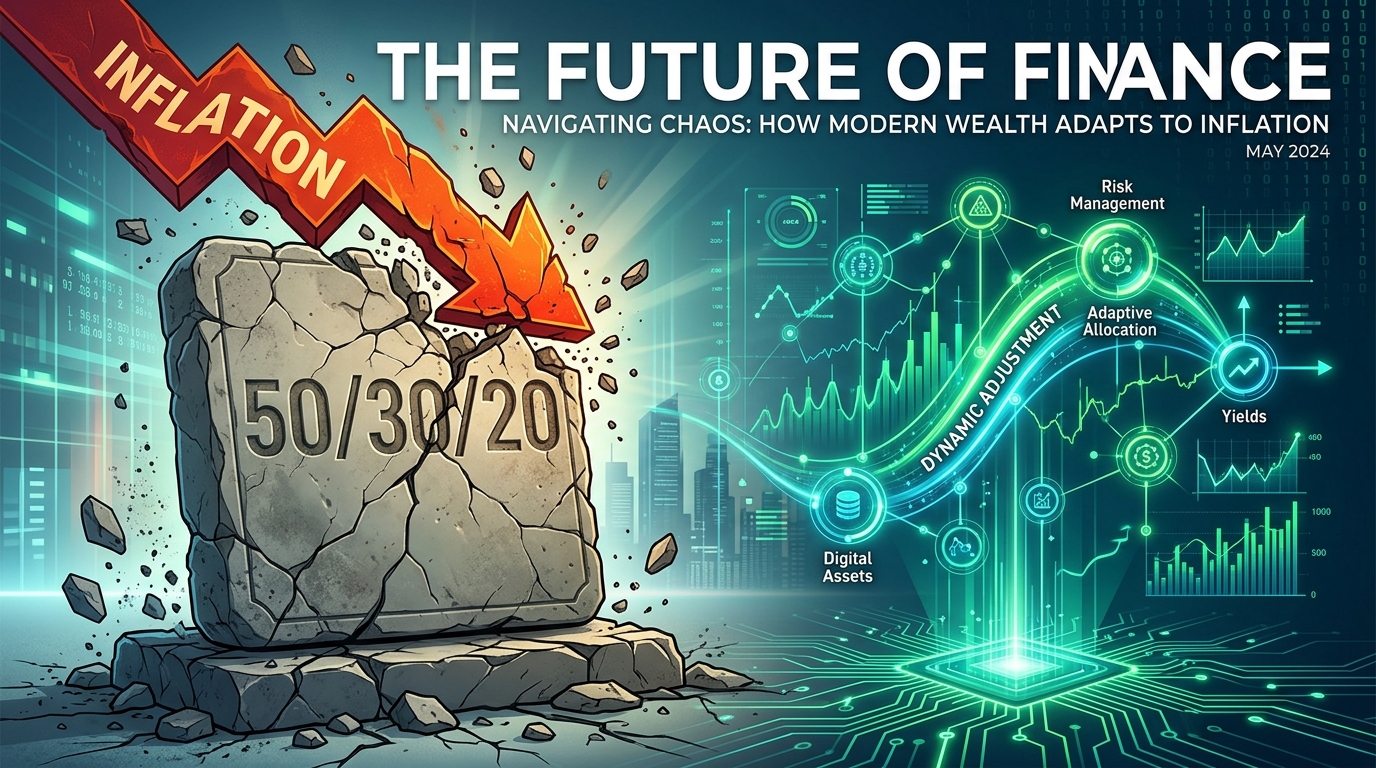
For decades, personal finance gurus, banking institutions, and economic columnists have prescribed a golden rule for financial health: the 50/30/20 budgeting method. Popularized by Senator Elizabeth Warren in her book All Your Worth: The Ultimate Lifetime Money Plan, the mathematical framework was simple, elegant, and universally applicable. You allocate 50% of your after-tax income to “Needs” (housing, utilities, groceries), 30% to “Wants” (dining out, entertainment, hobbies), and 20% to “Savings” and debt repayment.
For a long time, this formula worked beautifully. It provided a structured yet flexible boundary for the middle class to build wealth while enjoying the fruits of their labor. However, as we navigate the economic landscape of 2026, a harsh reality has set in: the 50/30/20 rule is broken.
Driven by compounding global inflation, skyrocketing housing costs, stagnant wage growth, and the structural shift of the modern economy, this rigid budgeting model has transformed from a helpful guide into an unrealistic, guilt-inducing mathematical impossibility for millions of professionals worldwide. To survive financially today, we must declare the death of fixed percentage budgeting and pivot toward a new paradigm: Dynamic Budgeting.
The Changing Architecture of “Needs”
To understand why the traditional model failed, we must look at the foundation upon which it was built. The 50/30/20 rule assumes that basic survival—keeping a roof over your head, utility lines running, and food on the table—should consume no more than half of your take-home pay.
In the current economic climate, that assumption is deeply flawed. Consider the housing market. Whether renting or buying, shelter costs in major urban hubs have grown at three times the rate of average salary increases over the past decade. A standard two-bedroom apartment that once swallowed 30% of a young professional’s income now routinely demands 45% to 55%.
Furthermore, the very definition of a “need” has evolved structurally. In 2005, a high-speed internet connection or a smartphone data plan might have been classified as a luxury or a “want.” In 2026, in an era dominated by remote work, digital banking, and cloud-based professional infrastructure, a reliable internet connection and a personal computer are as non-negotiable as running water.
When you add skyrocketing grocery prices fueled by supply chain shifts and climate-impacted agriculture, the “Needs” bucket naturally expands. For the average urban professional, basic survival costs do not stop at 50%; they overflow into 65%, 70%, or even 75% of total income. When your baseline existence requires three-quarters of your paycheck, forcing your life into a prehistoric 50% box creates immediate psychological defeat and systemic financial stress.
The Guilt Trap of the 30% “Wants”
When the “Needs” column expands, the traditional model dictates that the excess money must be carved out of the other columns. Typically, the 30% allocated for “Wants” is the first target for elimination. Financial influencers often weaponize this, preaching aggressive frugality—telling consumers that if they just stop buying gourmet lattes, cancel their streaming services, and never eat out, their financial problems will vanish.
However, modern economic journalism and psychological research show that this approach is counterproductive. Denying oneself any form of discretionary spending leads to what psychologists call “frugality fatigue,” a state of mental exhaustion akin to an overly restrictive crash diet. Eventually, the individual snaps, leading to massive, uncontrolled impulsive spending sprees that cause far more damage than a daily cup of coffee ever could.
Moreover, the 30% discretionary bucket is no longer just about hedonistic luxury. It is where networking happens, where mental health decompression occurs, and where professionals invest in experiences that prevent burnout in increasingly high-pressure corporate environments. Forcing people to feel guilty about spending money on joy—when the real culprit is systemic inflation and housing monopolies—is a flawed approach to financial media.
The Savings Stagnation
The most dangerous casualty of the broken 50/30/20 rule is the final 20%: Savings and Investment. Under the rigid old system, if your needs soared to 70% and you refused to cut your quality of life to absolute zero, your savings rate plummeted. Millions of workers today find themselves saving nothing at all, believing that because they cannot reach the magical 20% threshold, any smaller amount is pointless.
This all-or-nothing mindset is financially catastrophic. In compounding interest and wealth accumulation, consistency matters far more than the initial volume. Saving 2% or 5% of your income systematically every single month beats saving 20% sporadically or waiting for a massive raise that may never come due to corporate downsizing trends.
Enter Dynamic Budgeting: The Framework for 2026
If the fixed-percentage model is obsolete, what replaces it? The answer is Dynamic Budgeting—a fluid, priority-driven financial system that scales up or down based on your macroeconomic reality, career stage, and geographic location.
Unlike its predecessor, Dynamic Budgeting does not care about fixed percentages. Instead, it operates on three core principles:
1. The Variable Floor Baseline
Instead of setting a hard ceiling on needs at 50%, establish your personal “Variable Floor.” This is the absolute bare minimum cost required to keep your life functional in your specific city this year. If your floor is 68%, you accept it without guilt. Your budget acknowledges this reality and adjusts the other columns dynamically rather than pretending you can magically lower your rent by wishing it away.
2. Milestone-Based Allocation
Dynamic budgeting shifts the focus from monthly percentage targets to long-term milestone horizons. If you are in a high-cost-of-living area building your career, your savings rate might intentionally sit at a modest 5% while your needs consume 75%. However, when you cross a career milestone—such as a major promotion, a successful side hustle launch, or a move to a lower-cost region—the surplus income is dynamically routed entirely into savings, skipping the common pitfall of lifestyle inflation.
3. The “Priority Scaling” Mechanism
Instead of splitting your money into three buckets simultaneously, you rank your financial goals in order of absolute psychological and practical importance.
- Phase 1: Secure the Variable Floor (Survival).
- Phase 2: Build the Hyper-Fluid Emergency Fund (3 to 6 months of your actual current floor cost, not a theoretical number).
- Phase 3: Allocate to High-Yield Assets (Investing).
- Phase 4: Funnel the remainder into guilt-free lifestyle enhancement.
If macroeconomic conditions shift—for example, if utility costs surge during the winter—your Dynamic Budget automatically scales back the lifestyle phase to absorb the shock, without fracturing your core investing habits or throwing your entire financial strategy into disarray.
Conclusion: The Path Forward
The obsession with rigid financial rules belongs to an era of economic stability that no longer exists. The global economy of 2026 demands financial agility, mental resilience, and custom-tailored strategies.
Discard the guilt of not fitting into the 50/30/20 mold. Accept your actual cost of living, build a dynamic framework that accommodates the realistic numbers of today, and remember that financial journalism is not about forcing your life into an outdated spreadsheet—it is about making the spreadsheet work for the life you actually live.